
The Art of the Spoon Sweet: Përmet’s Slow Food Heritage
A deep look into gliko — Përmet’s slow-cooked fruit preserves. Learn how local makers turn green walnuts, wild figs, and wood fire into Albania’s signature gesture of welcome.
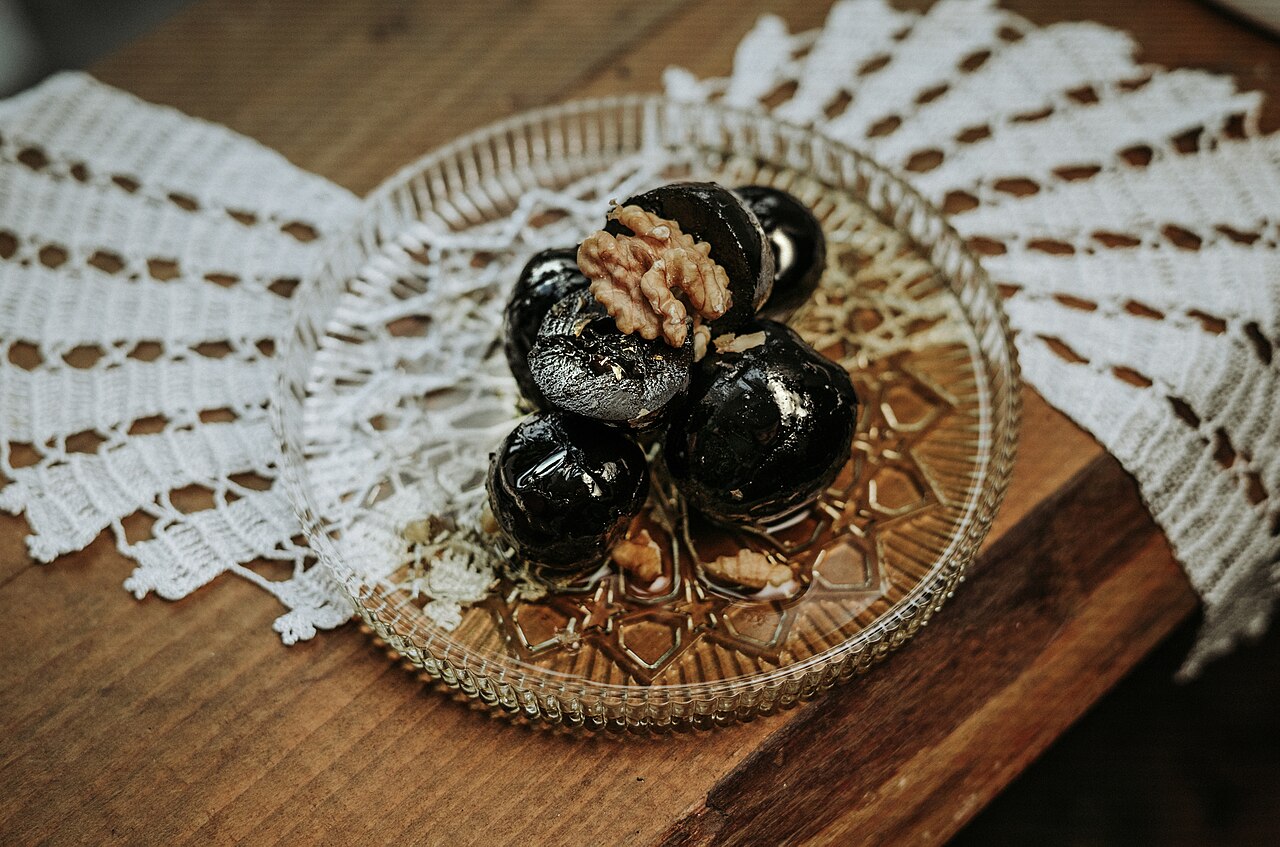
If you sit in a stone-paved courtyard in Përmet, you will almost certainly be offered a small glass of cold spring water, a tiny chalice of clear grape raki, and a single, glistening whole fruit resting in a heavy silver spoon. This is gliko, the signature preserve of the Vjosa Valley, and it is far more than a sweet—it is a ritual of welcome, a measure of patience, and the taste of a valley that refused to rush.
What is Gliko?
Unlike standard jams or marmalades, where fruit is crushed and boiled down, gliko preserves the fruit whole, firm, and suspended in a clear, delicate syrup. The fruit must retain its shape, its texture, and its distinct character. The process is a slow dance with temperature and chemistry, utilizing simple ingredients: fresh-picked fruit, lime water (calcium hydroxide) to keep the skins firm, sugar, water, and lemon juice.
"As you hold the spoon and take that first slow bite, you feel the crisp snap of the outer skin, followed immediately by the warm, sweet release of the syrup inside. It is a sensory bridge connecting you directly to the orchards that line the Vjosa."
The Harvesting Calendar
A true Përmet kitchen is ruled by the seasons. Gliko is made from whatever fruit is at its peak of maturity. The calendar is precise and unyielding:
| Season | Fruit Type | The Secret Process |
|---|---|---|
| Late Spring (June) | Green Walnuts (Arrë) | Harvested before the inner shell hardens. Each walnut is pierced repeatedly and soaked in water for nine days to leach out the bitterness, then peeled by hand. |
| Mid Summer (July) | Wild Fig (Fik) | Picked small and green. The stems are cut, the milk washed away, and each fig is boiled briefly, soaked in cold water, and carefully filled with a single almond or walnut sliver. |
| Late Summer (August) | Watermelon Peel (Shalqiri) | The pink flesh is eaten; the firm white rind is cut into decorative serrated shapes, soaked in lime water, and cooked until translucent like glass. |
| Autumn (October) | White Plum & Quince (Ftoi) | Quince is julienned or sliced, cooked slowly with wild geranium leaves (dëllinjë) for an aromatic herbal note. |
The Fire and the Patience
Cooking gliko is an art of observation. The local women boil the fruit in wide, copper cauldrons over wood fires. The temperature must be steady—too high, and the sugar caramelizes, turning the clear syrup a dark amber; too low, and the fruit softens into mush. The syrup is boiled until it reaches shurup, the point where a single drop placed on a cold plate holds its rounded shape without spreading.
When you visit a gliko workshop on our Përmet Slow Food Trail, you don't just watch. You stand over the copper pot. You smell the rising steam of wild figs and wood ash, and you listen to the rhythmic bubbling of syrup that has been cooked this way for three hundred years. It is a slow, grounding experience that teaches you to appreciate what happens when humans cooperate with the natural tempo of the valley.
How to Enjoy It
If you are served gliko at a homestay, remember these simple etiquettes:
- Take the spoon: It is served as a single portion. You eat the whole piece of fruit in one or two bites directly from the spoon.
- Sip the water: The accompanying cold water is meant to cleanse your palate before and after the sweet.
- Pace yourself: Let the sweetness linger. Follow it with a sip of hot Turkish coffee or a bite of salty sheep's cheese—the local pairing that balances the sugar perfectly.