
Řeka
The Vjosa, briefly and truthfully
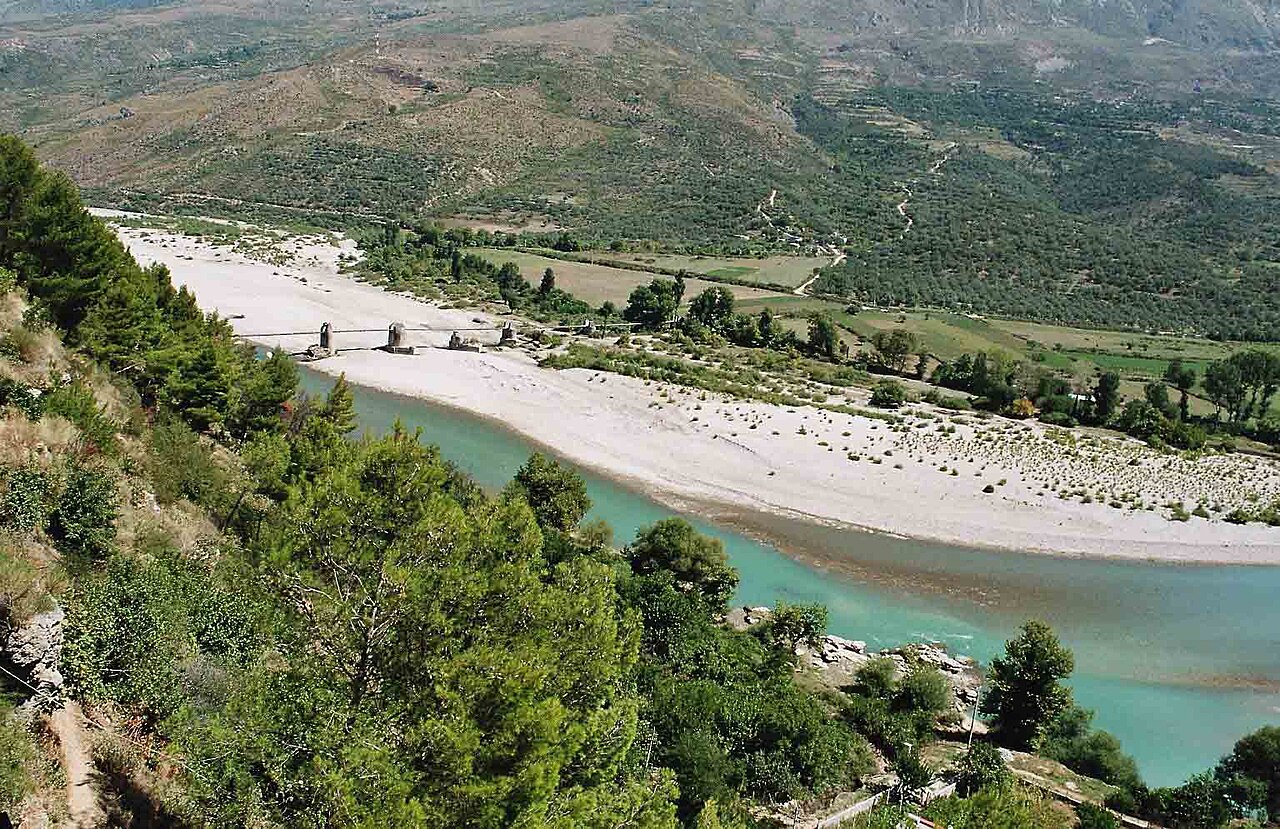
The Vjosa rises in the Pindus mountains of Greece (as the Aoös) and runs about 270 kilometres to the Adriatic without a single dam on its main course — braided gravel beds, shifting islands, and a valley that still farms to the waterline. In March 2023 Albania declared it the Vjosa Wild River National Park, the first national park in Europe protecting a wild river along its whole length.
Our stretch
Between Përmet and Këlcyrë the river does its best work: wide braids under the Trebeshina and Dhëmbel ridges, the Lengarica canyon and its thermal springs, and the narrow limestone gate of the Këlcyra Gorge. This is where we live and where every trip begins.
The national park exists today because local residents, international scientists, and activists fought proposed hydropower dams for over a decade. By choosing to visit the valley, your travel spend directly reinforces this preservation model — demonstrating that a free-flowing, wild river is worth far more to the local economy than concrete and turbines.
Seasons & Flows
Choosing your time in the valley
Spring High Water
The mountain snowmelt fills the channels, creating the best and liveliest conditions for white-water rafting. The valley slopes are vibrant green, and the roses of Përmet are in full bloom.
Summer Swim Reaches
The river runs gentler and warmer, ideal for swimming holes and families. Gorge walks in Këlcyra offer deep shade, and cool mountain breezes settle over starlit village dinners.
Autumn Harvest
The trails empty out and the air cools, but the Bënja thermal pools remain warm. Houses are busy boiling copper pots of gliko fruit preserves and firing wood-ash raki stills.
Winter Quiet
A season of silence and snow capped peaks. Soak in the steaming open-air thermal baths of Bënja on crisp, frosty mornings with no other travelers in sight.